Layer Point
Our workEquipment tracking with live alerts

Equipment tracking with live alerts

Custom software · Connected devices

A growing business with equipment spread across many customer sites needed to know what was happening on each one without sending someone to look. We built one platform that brings every unit, its status and its history into one place, and tells the right person when something needs attention.
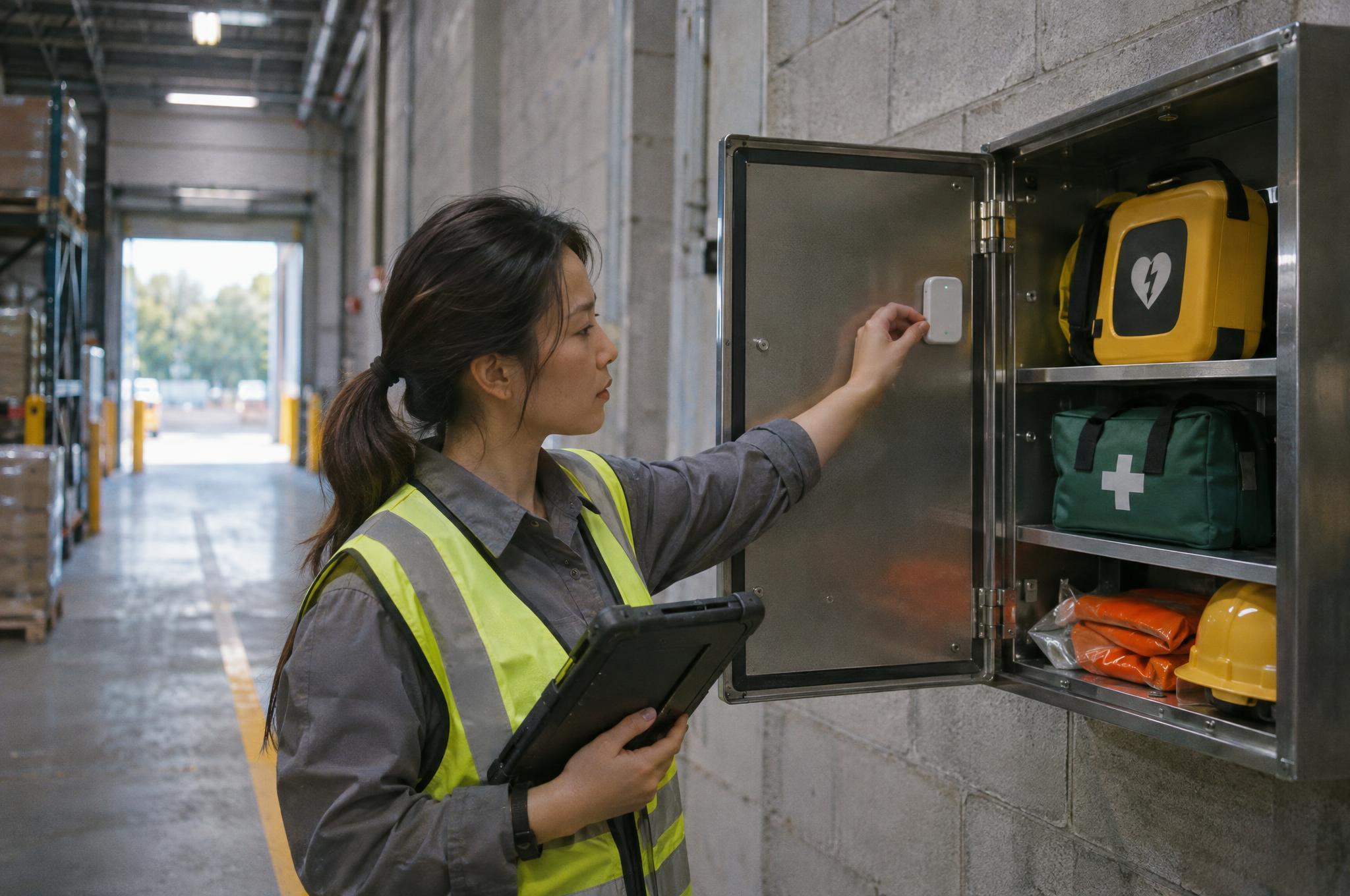
technician checking equipment on site
The story

From the point to the layer

The pointEquipment was spread across many sites, and problems were only found when someone happened to visit.
The layerConnected equipment and trackers report into one platform, and alerts go straight to the right person.
What changedProblems get caught when they happen, not on the next site visit.
Who we worked with

The client

A growing business that places and maintains equipment at customer locations. Its team is responsible for making sure every unit is in place, working and checked on schedule, across a large and growing number of sites.

Where it got stuck

The challenge

As the number of units grew, so did the work of keeping track of them. Status information lived in a supplier's tool, records lived in spreadsheets, and the office pieced them together by hand.

The team could not easily answer simple questions: where is each unit, is it working, when was it last checked, and who needs to know when something changes. Issues were usually found late, by a person on site or by a customer.

The client did not want another tool to log in to. They wanted one place that their team, and in time their customers, could rely on.

The layer

What we built

01One record for every unitEach piece of equipment has its own record with its location, status, assigned customer and full history.
02Live device dataConnected trackers and sensors report into the platform automatically, through the supplier's data feed rather than manual checks.
03Alerts to the right personWhen a unit goes offline, reports a fault or misses a scheduled check, the right person is notified with the details attached.
04Dashboards for the officeA clear view of every unit across every site, filtered by customer, location or status.
05Built to growSized for real usage, with backups and monitoring in place, so it scales as more units come online.
The process

How we worked

01We found the pointWe sat with the team to map how they tracked equipment today, where information came from and where it got stuck.
02We built the layerWe connected the device data, moved existing records across and built the platform in stages, so the team could use each part as it was ready.
03We kept it runningWe trained the team and stayed on for support and the next stages of the project.
What changed

The result

The team now sees every unit and its status in one place. Problems reach the right person as they happen, instead of being found on the next visit. Manual lookups and spreadsheet updates have been replaced by records that keep themselves current.

Inside the build

What the team sees

Unit 14 · Site BStatus alert, technician notifiedRouted to the on-call tech
FAQ

About this project

01

What kind of equipment does this work for?

Any equipment that can report its status, through built-in connectivity, a tracker or a sensor. Equipment that cannot report can still be tracked by serial number and site, with scheduled checks recorded by your team.

02

Did the client have to replace their device supplier?

No. We connected to the supplier's data feed, so the client kept the devices they already had.

Could SR&ED cover part of your build? Read how it works

How we work

Every project, the same three steps

How we work
01We find the pointWe sit with your team and pick the one problem costing you the most.
02We build the layerSoftware, AI and integrations on top of the tools you already have.
03We keep it runningYour team gets trained, you own everything, and we stay on for support.

Tell us what's slowing you down

We listenHow the work flows today, and where it gets stuck.
We pointThe one thing we would fix first, and why.
You decideA straight answer on fit. No follow-up sequence.
Book a free callStep 1 of 2